
Clay Soil and Your Lawn: Why Northeast Ohio Turf Struggles
Understanding compaction, drainage and why standard lawn care falls short in clay soil.
Every year, we see the same pattern across Northeast Ohio lawns, especially across residential properties with heavier clay soils. Homeowners put in the work. Bare spots get reseeded. Fertilizer goes down at the right time. Watering schedules tighten as the weather shifts. For a few weeks, it looks like the lawn is turning a corner.
Then the same problems return.
Wet areas linger after rain. Thin patches reappear in the same places. Sections of turf never quite catch up, no matter how much attention they get. At that point, most people assume something went wrong with timing, products or weather. In reality, those aren’t usually the issue. What’s happening is simpler and harder to see. The lawn is running up against the limits of the soil beneath it.
Clay soil is common throughout Northeast Ohio, and it behaves differently than most homeowners expect. It holds water, compacts easily and restricts the space where roots need to grow. When those conditions take hold, standard lawn care can improve appearance for a while without changing the long-term outcome.
Understanding that distinction is what separates short-term improvement from lasting results. The goal isn’t to do more to the lawn. It’s to recognize what the soil can support, where those limits are being reached and what actually changes the trajectory over time.
Why Clay Soil Sets Limits Most Lawns Can’t Overcome
Most lawn problems in Northeast Ohio don’t start with grass. They start with the soil.
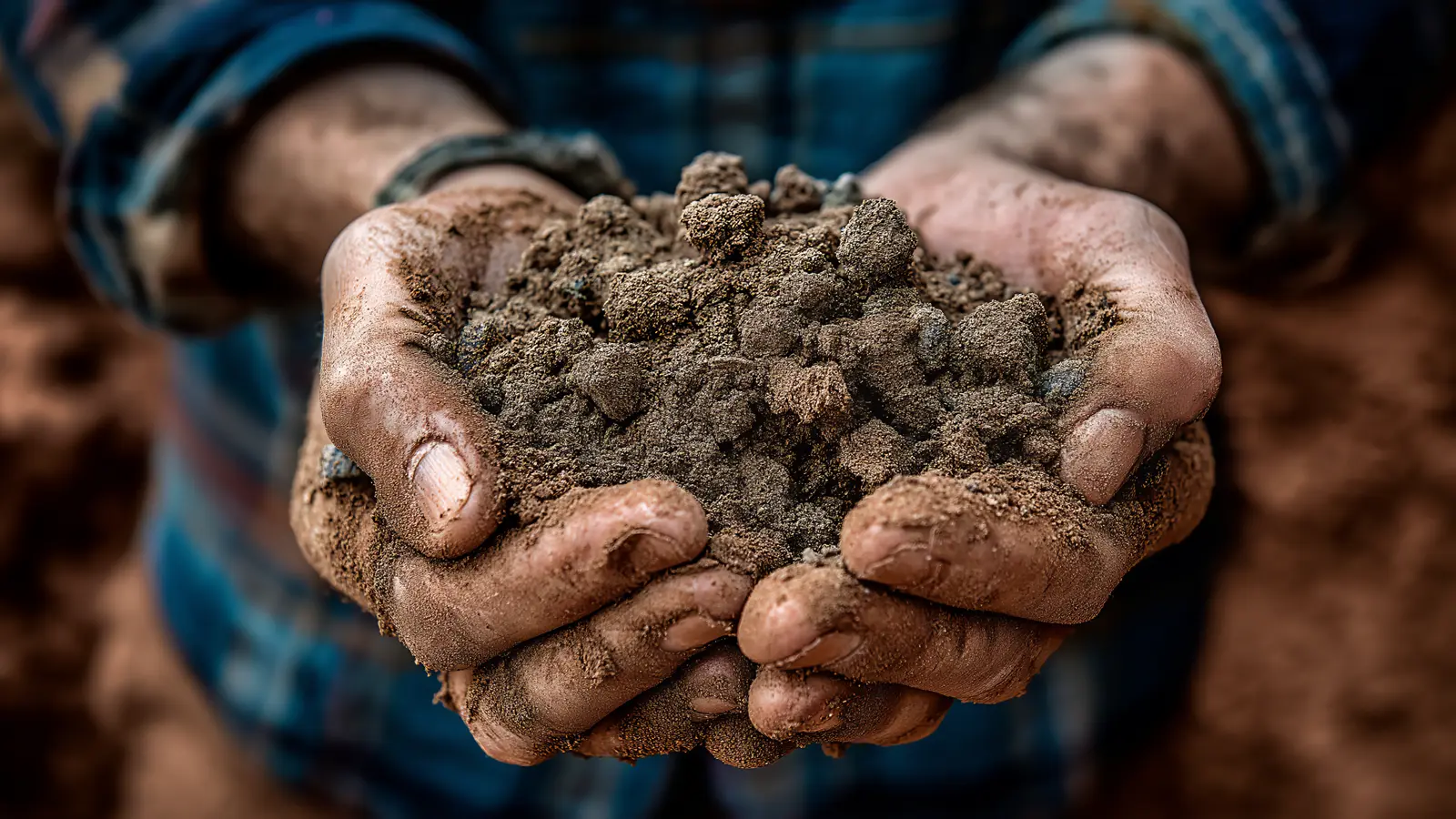
Clay soil is made up of extremely small particles that pack tightly together. That density gives clay its defining characteristics. Water moves through it slowly. Air struggles to circulate. Under pressure, it compacts easily and tends to stay that way. What looks like solid, supportive ground is often a restrictive environment just below the surface.
It helps to separate two ideas that are often lumped together. Soil texture refers to the particle size of the soil, whether it is clay, silt or sand. Soil structure describes how those particles are arranged and how water and air move between them. Clay soil has a fixed texture, but its structure determines whether it can actually support healthy growth. When that structure compresses or breaks down, the soil stops functioning as a growing medium.
For grass, those limitations show up where it matters most: at the root level. Healthy turf depends on roots that can move through soil, access oxygen and absorb water consistently. In clay, those conditions are often restricted. When soil stays dense or holds too much moisture, roots remain shallow and unstable. The lawn may still green up in ideal conditions, but it lacks the foundation to sustain growth.
That’s why clay soil rarely causes sudden lawn failure. It creates boundaries. Within those boundaries, grass can survive for a while. Once those limits are pushed, whether through compaction, weather or repeated stress, the lawn begins to decline in ways surface treatments can’t fully correct.
How Those Limits Show Up in Real Lawns
Clay soil doesn’t usually show up as a single, obvious problem. It shows up in patterns, often in the same areas, year after year.
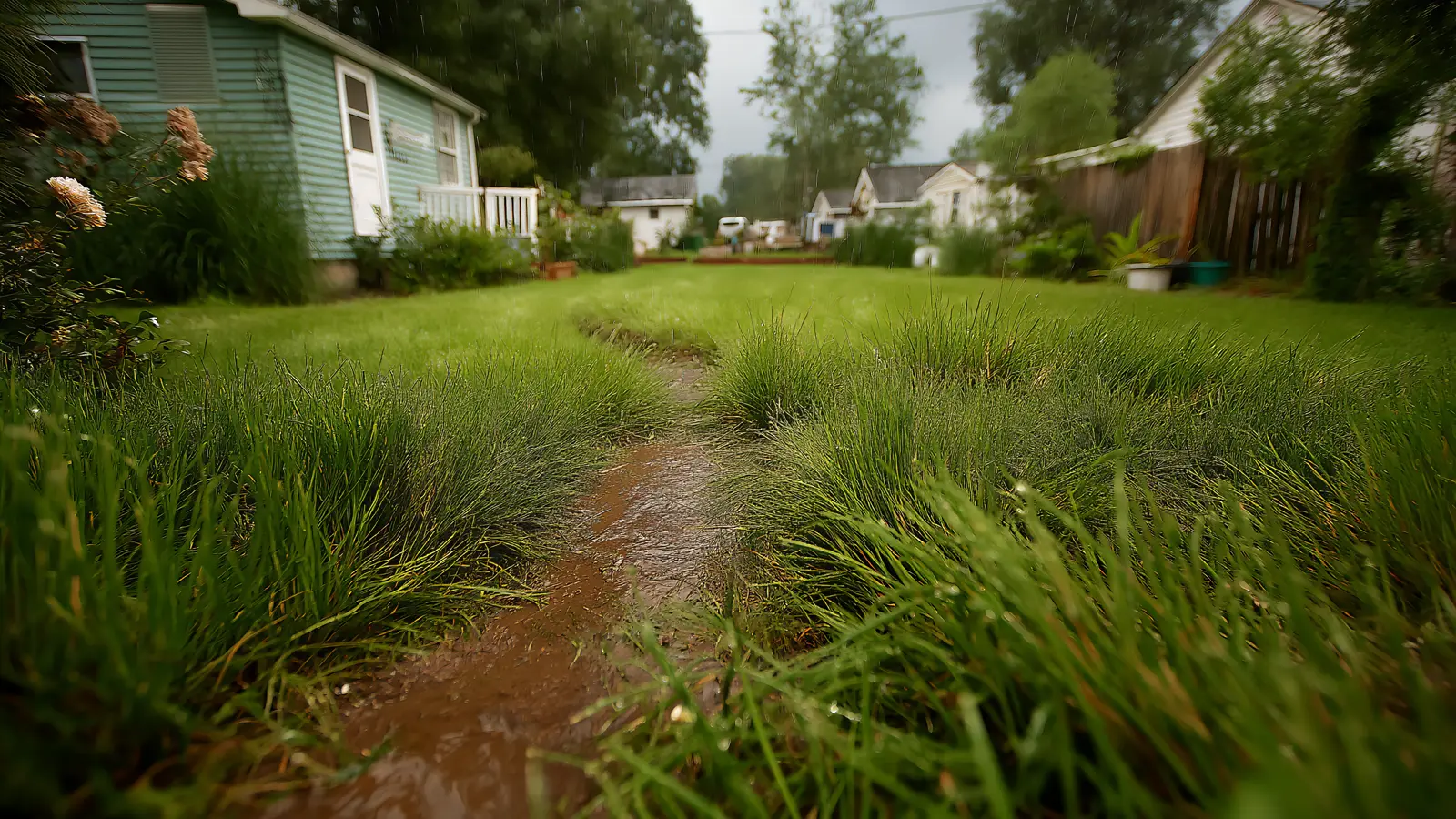
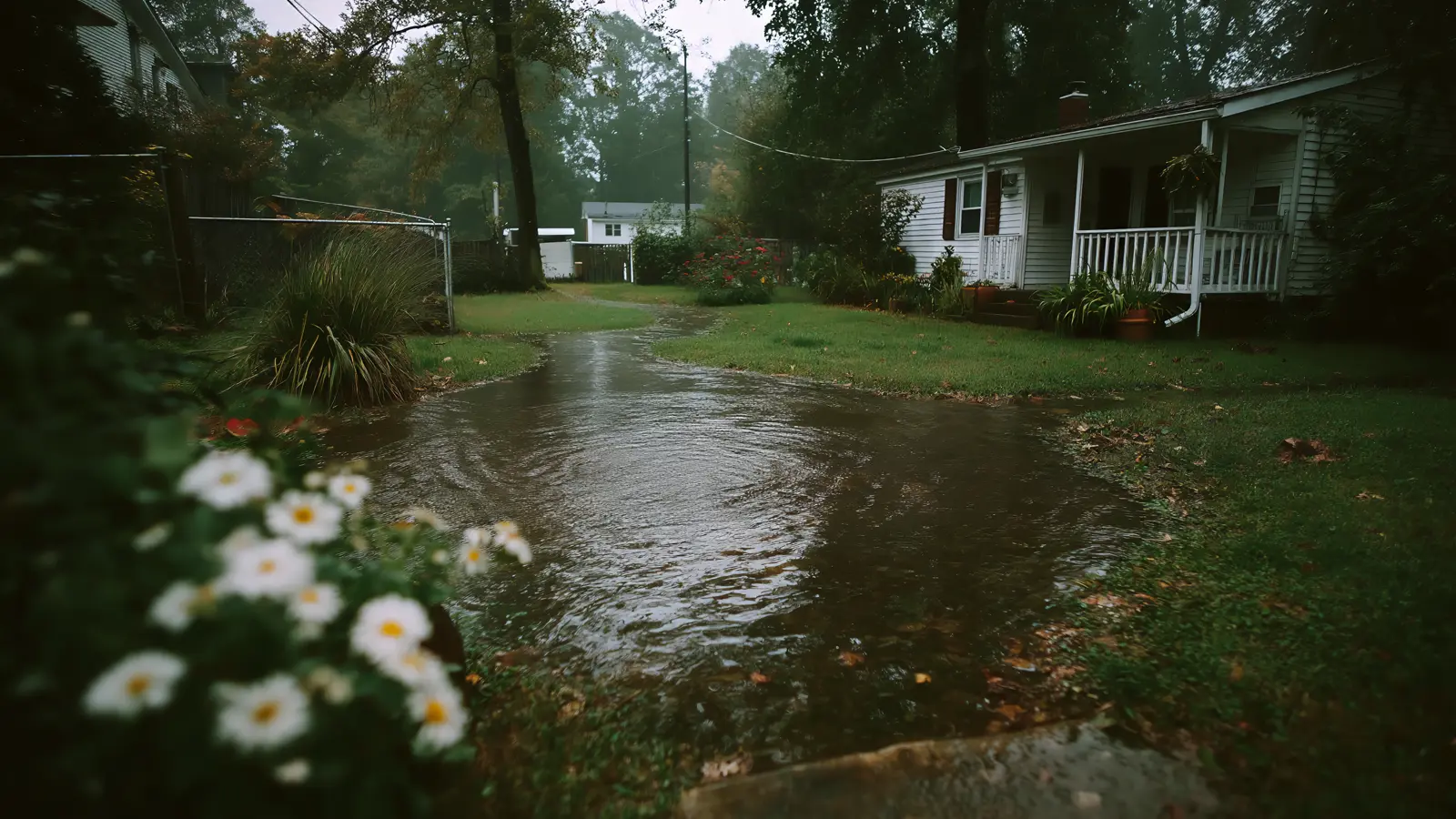
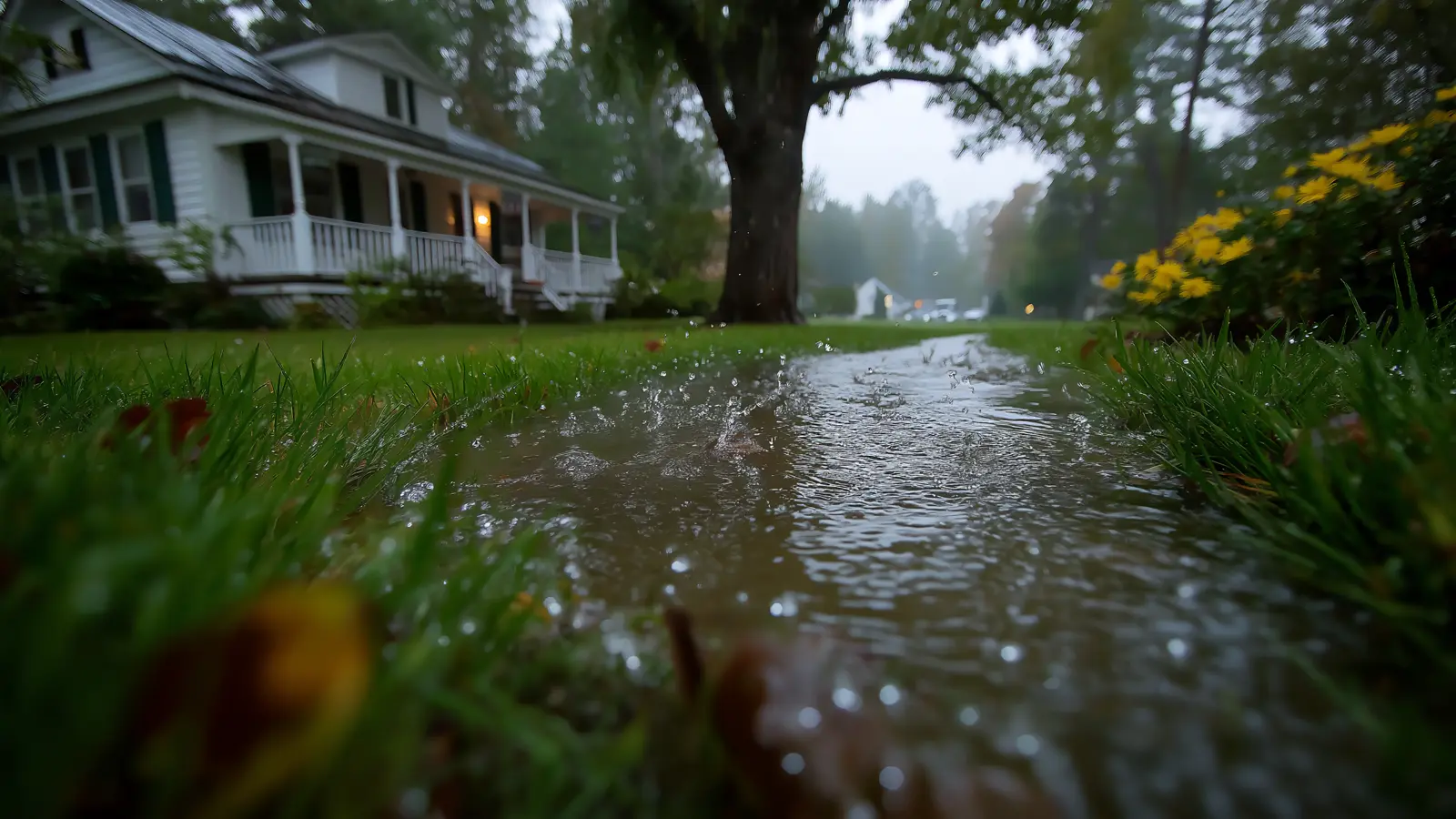
One of the first signs is water that lingers after rain. After a storm, parts of the lawn stay wet or soft while other areas begin to dry. In heavier cases, water collects on the surface rather than soaking in. This isn’t always a grading issue. It’s often a sign that the soil can’t absorb water fast enough, so it sits or runs off. (This is also where broader drainage issues often begin to show up across a property.)
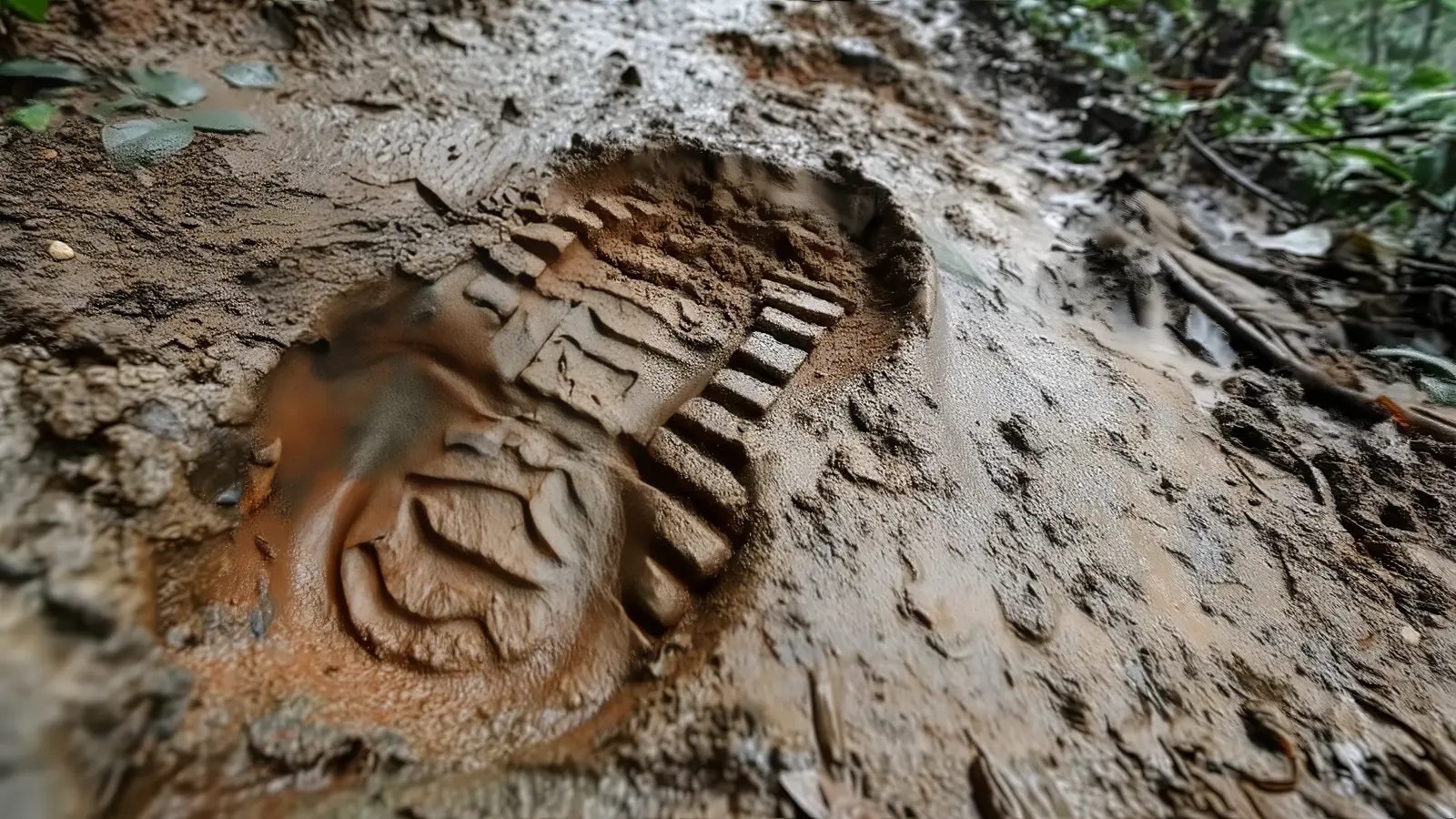
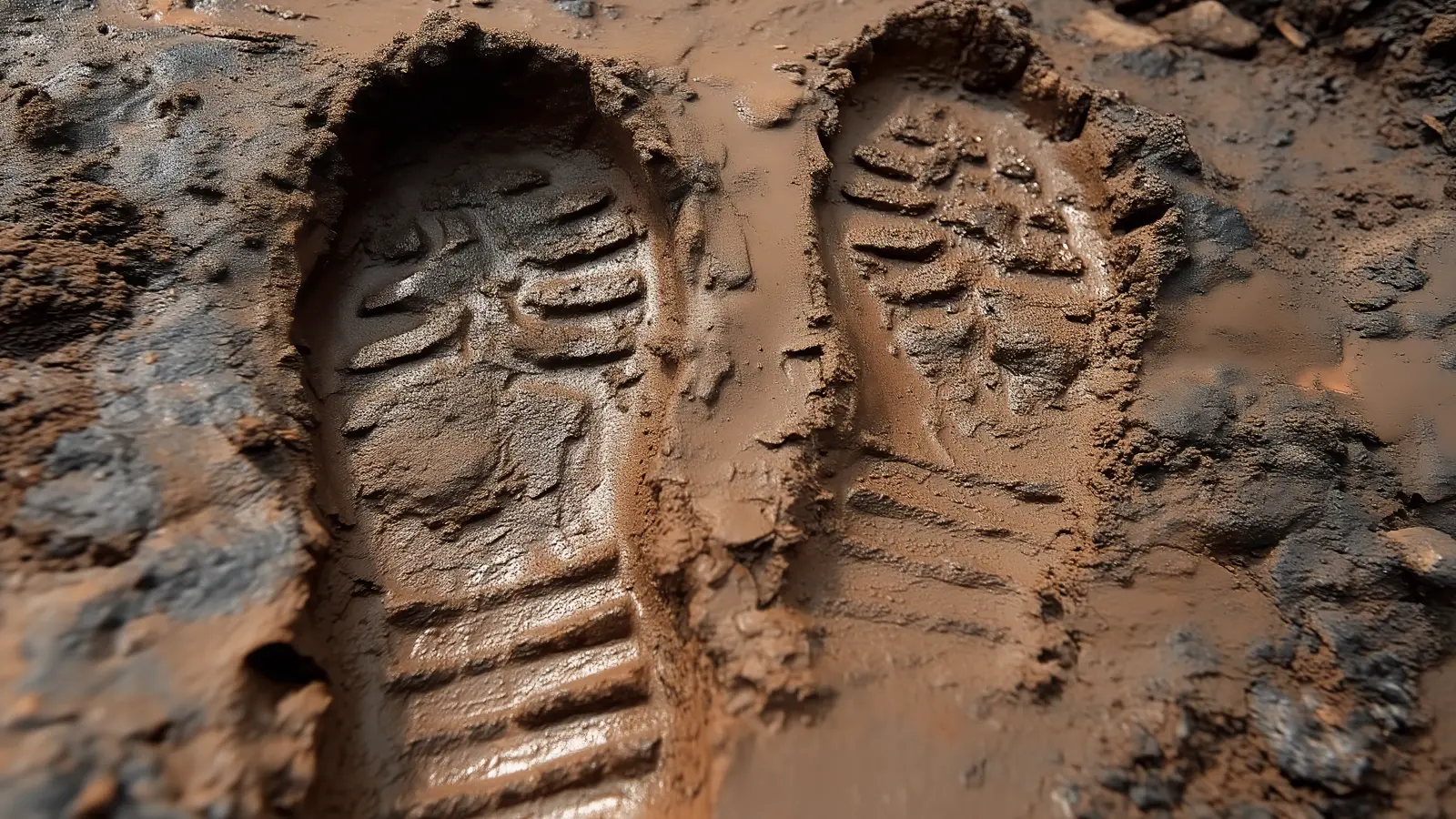
The soil itself tells a similar story. When it’s wet, it feels sticky and dense, clinging to shoes and tools. When it dries, it hardens into a compact surface that’s difficult to penetrate. That constant swing between saturated and hardened conditions makes it difficult for roots to establish any consistency.
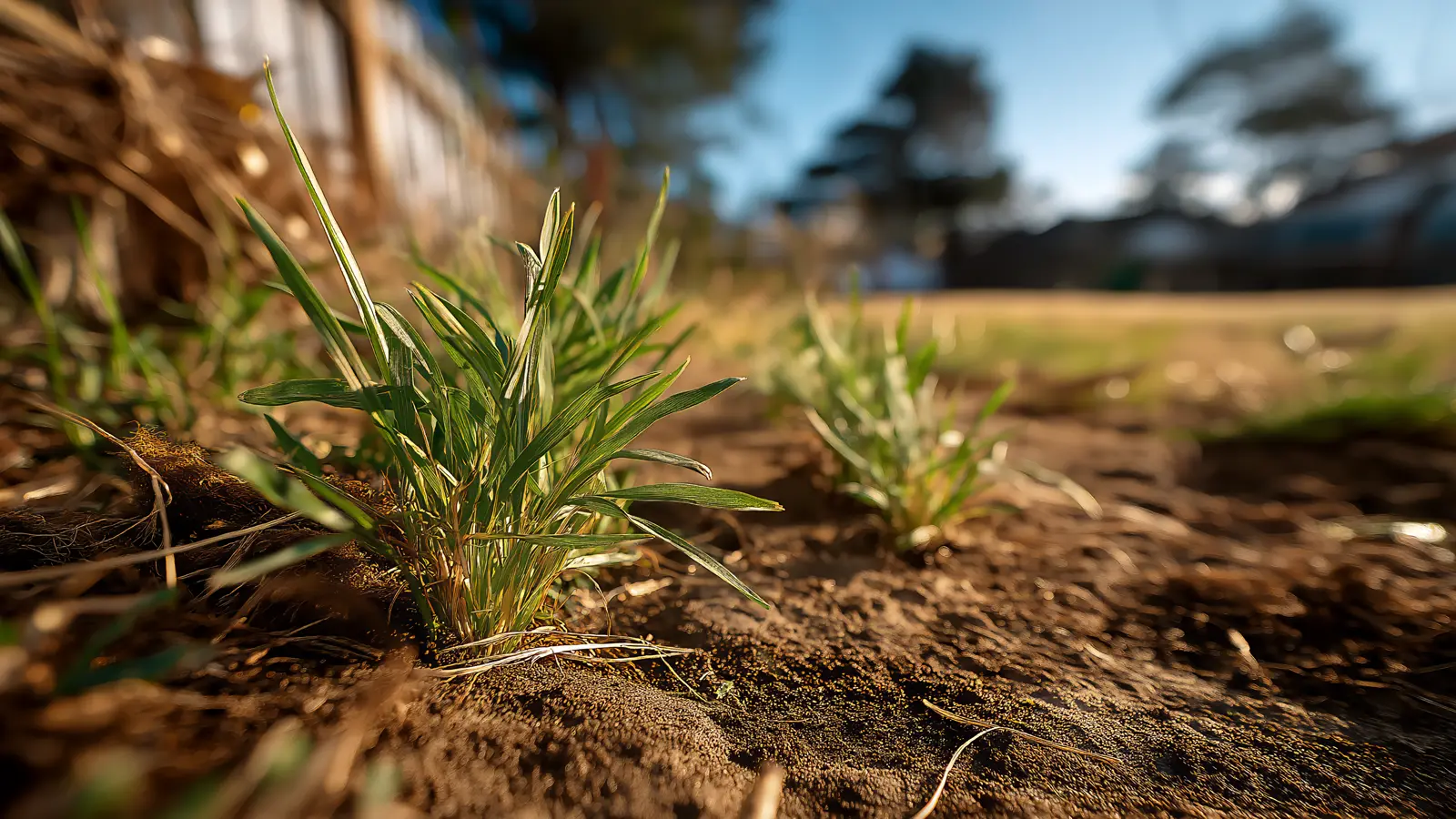
Over time, these conditions start to shape how the lawn grows. Thin spots or bare patches tend to reappear in the same areas, even after reseeding. Grass might establish itself temporarily, then fade as conditions shift back to what the soil can support. At that point, the problem isn’t maintenance; it’s that the environment beneath the surface hasn’t changed.
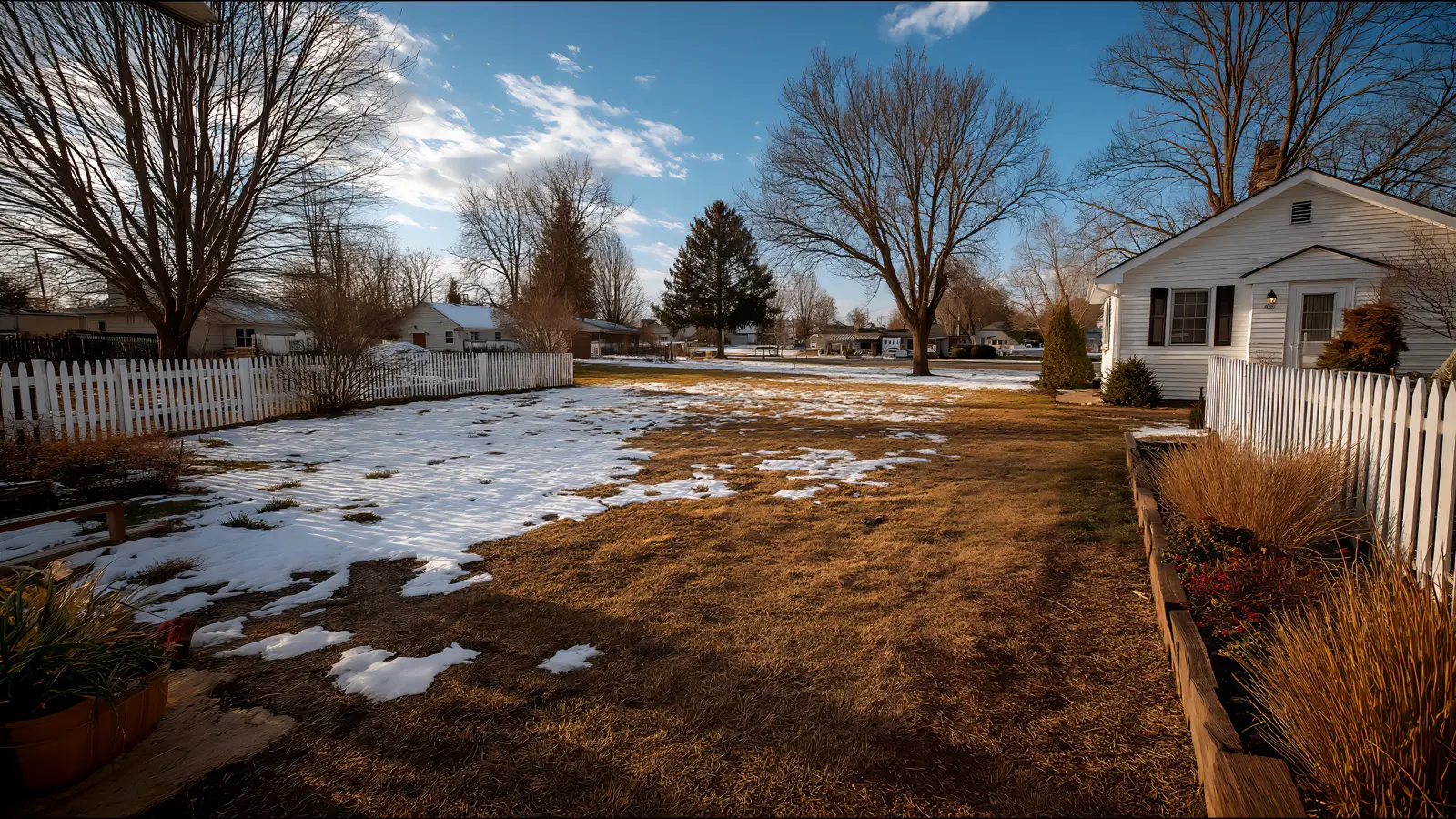
Winter tends to make these patterns more obvious. Freeze–thaw cycles lift and shift already dense soil, leaving sections uneven or spongy as temperatures rise. What looks like surface damage is usually tied to instability below, where soil structure has been disrupted and hasn’t settled back evenly.
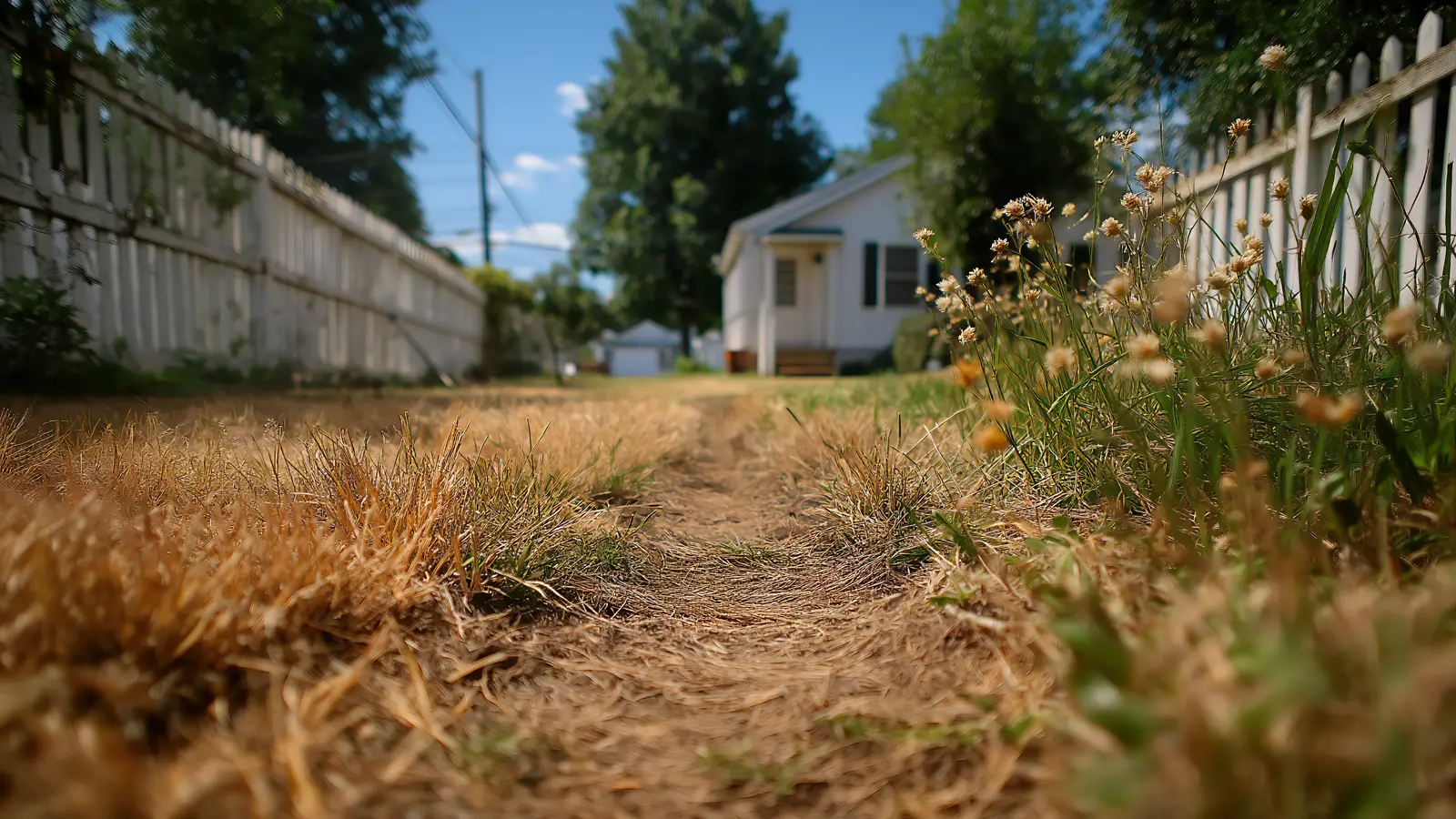
It’s easy to treat each of these as separate problems. In most properties, these issues don’t appear everywhere; they show up in consistent zones that follow the same patterns year after year. Wet spots, thinning turf, uneven ground. In reality, they’re connected. They all point back to the same limitation: soil that can’t regulate moisture or support consistent root growth. Until that changes, the lawn follows the same cycle, no matter how well it’s maintained.
Why Standard Lawn Care Stops Delivering Results
Most lawn care practices are built on a simple assumption: the soil can support healthy growth. When that assumption holds, the basics work. Aeration improves airflow. Overseeding fills in thin areas. Fertilizer strengthens turf. Watering supports recovery.
In clay soil, that foundation is often missing.
Aeration is a good example. Core aeration relieves surface compaction and creates temporary channels for air and water. For a short time, the lawn responds. Growth improves. Color deepens. But if the underlying soil structure remains dense, those channels close, and the same limitations return. What looks like progress is often a short-lived improvement.
Overseeding runs into a similar barrier. New grass can germinate in clay soil, especially when moisture is consistent. The challenge comes after. Without a stable structure beneath the surface, roots struggle to establish depth. Seedlings may look strong early on, then thin out as the soil dries, compacts or becomes saturated again.
Fertilizer adds another layer of confusion. Clay soil holds nutrients well due to its density. The issue isn’t always availability; it’s access. When roots are shallow or restricted, they can’t effectively use what’s already there. Adding more fertilizer doesn’t solve that problem. In some cases, it accelerates top growth without strengthening the root system underneath.
Watering can make things worse. Frequent watering keeps the surface moist, which can improve appearance in the short term. But in clay soil, that moisture lingers. Instead of encouraging deeper roots, it reinforces shallow ones and increases the risk of compaction and disease.
None of these practices is wrong. They’re just being applied to conditions they weren’t designed to overcome. When soil structure limits airflow, drainage and root movement, standard lawn care can temporarily improve appearance without changing the long-term outcome. This is why repeated lawn repairs tend to produce diminishing results over time.
The Role of Compaction and Northeast Ohio Conditions
Clay soil doesn’t exist in a vacuum. In Northeast Ohio, the environment actively pushes it toward its most restrictive state.
Compaction is the biggest driver. Every lawn experiences pressure from foot traffic, mowing and equipment. In clay, those small particles press closer together and tend to stay that way. What starts as slightly dense soil gradually becomes tightly packed, limiting the space in which roots, water and air can move.
In many lawns, compaction develops in layers. The surface may respond to aeration, but deeper zones can remain dense. This is where subsurface compaction, or hardpan, becomes a factor. Water may briefly enter the soil, then stall. Roots encounter the same barrier, which keeps them shallow even when the surface appears improved. This is often where a site evaluation reveals limitations that aren’t visible on the surface.
Seasonal conditions amplify the problem. Freeze–thaw cycles expand and contract the soil, disrupting its structure and then compressing it again as it settles. Snowmelt and early-spring rains saturate already slow-draining ground, keeping the soil in a wet, vulnerable state where compaction is more likely.
Over time, these forces compound. Clay soil starts dense, then becomes more restrictive with each season. Compaction builds. Drainage slows. Root depth decreases. What looks like a lawn that “won’t improve” is often a site where the soil has gradually tightened beyond what standard treatments can reverse.
What Actually Improves Clay Soil Over Time
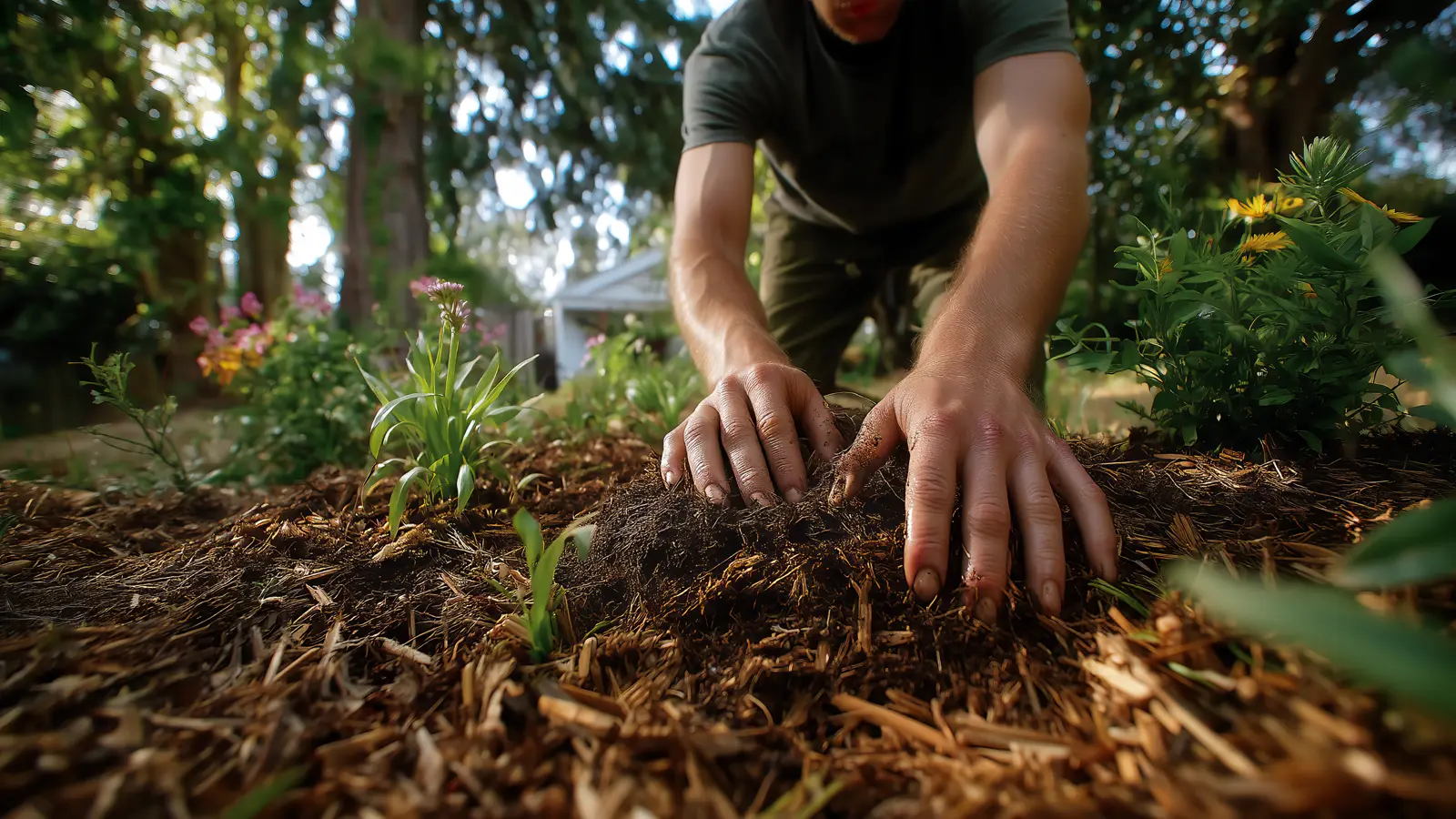
Improving clay soil isn’t about a single fix. It’s about changing how the soil functions, and that happens gradually. In practice, this is where most long-term improvements begin, not with aggressive treatments, but with consistent changes to soil structure over time.
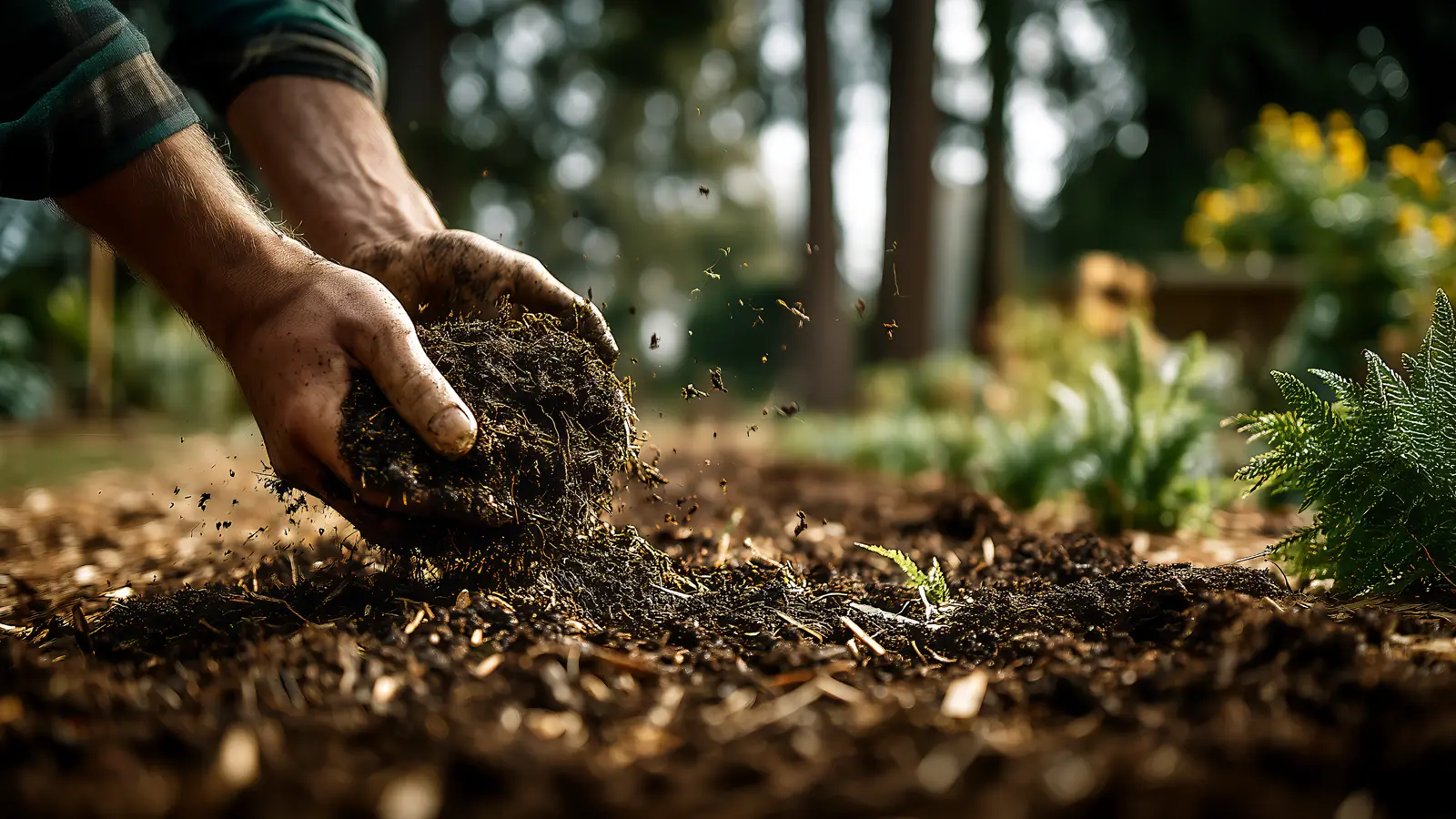
The most effective driver of that change is organic matter. Compost, shredded leaves and grass clippings don’t just add nutrients. They help separate dense clay particles and create space within the soil. Over time, that space allows air to circulate, water to move more evenly, and roots to grow deeper and more consistently.
This process takes time. Thin layers of organic material added year after year, along with natural biological activity in the soil, begin to rebuild structure. As organic matter increases, the soil becomes more stable and less prone to extreme swings between wet and hard conditions.
Water movement also needs to be addressed. In many lawns, the issue isn’t just that clay holds water; it’s how that water collects and moves across the property. Low spots and subtle grading issues can concentrate moisture in the same areas year after year. Improving drainage often means adjusting those patterns, not just treating the surface. In practice, improving these conditions starts with understanding how water and soil are interacting across the property.
Real improvement comes from consistency, not intensity. Clay soil doesn’t change overnight, and quick fixes rarely hold. Over time, as structure improves and compaction decreases, the lawn becomes easier to maintain because the soil supports it.
When the Lawn Isn’t the Right Solution
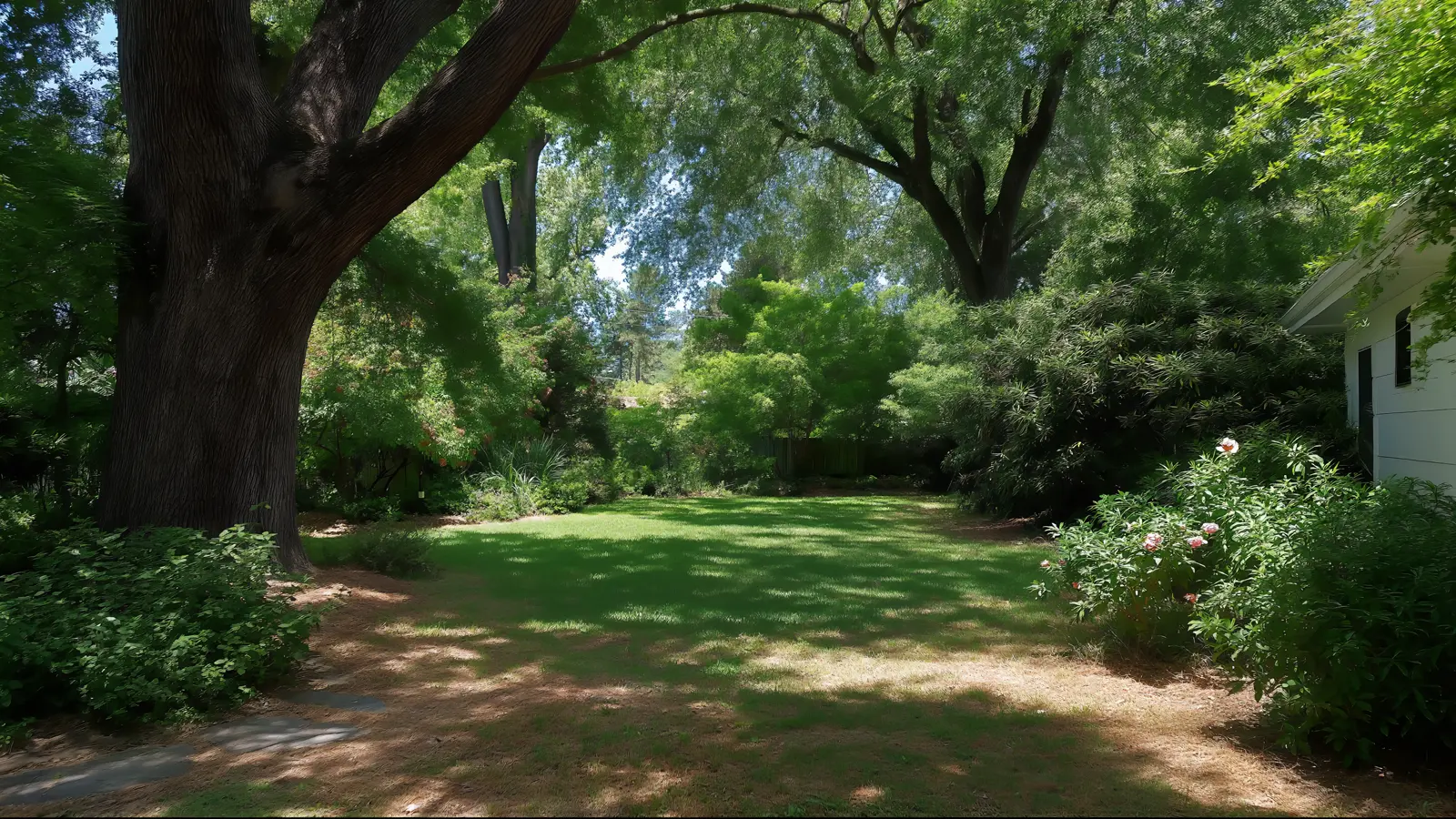
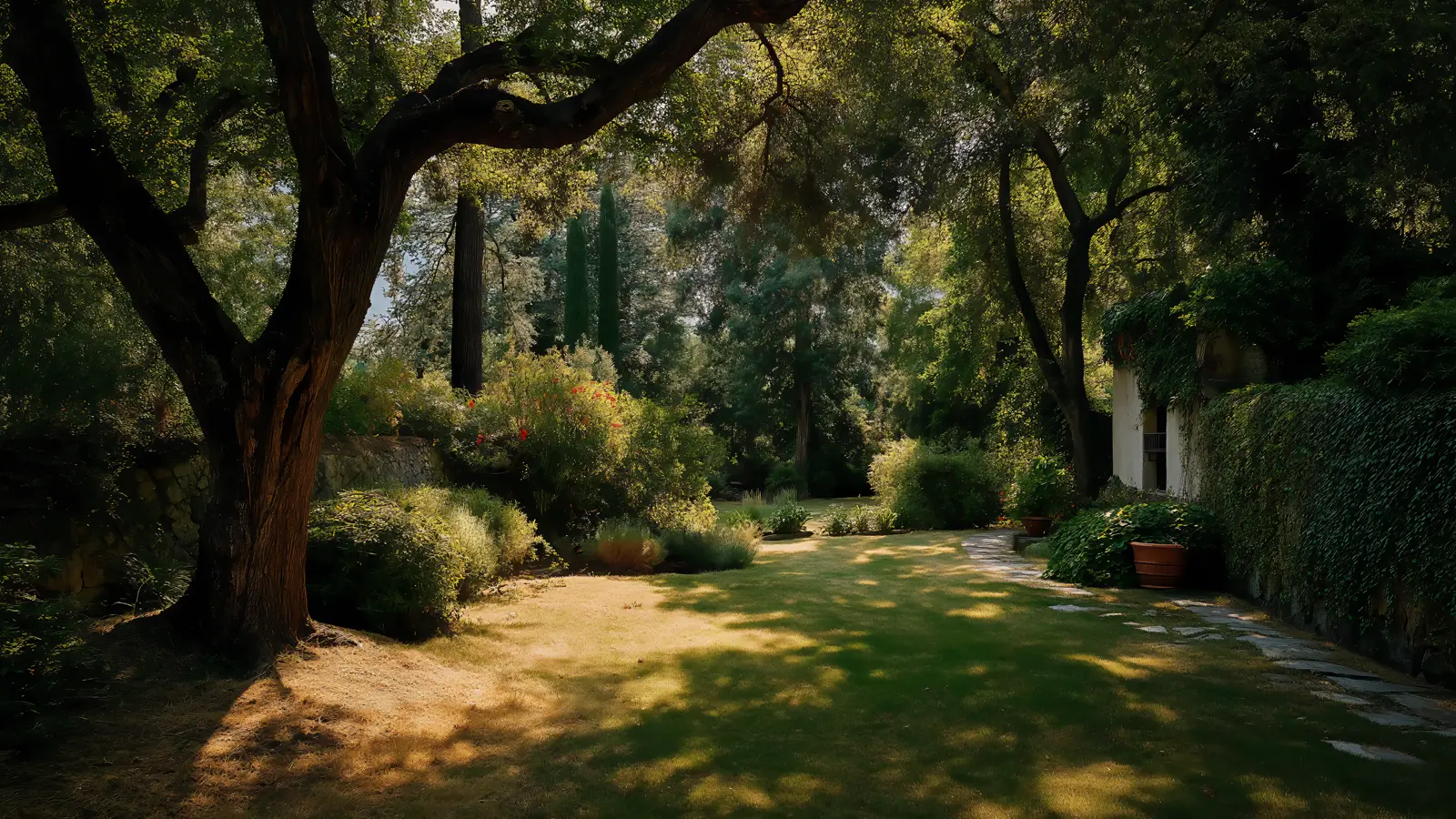
Not every part of a yard is suited for turf, and clay soil tends to make that clear over time. In many cases, this is the point where we advise shifting away from turf in those areas.
Some areas consistently face challenges regardless of the effort invested. Low spots that remain wet, narrow strips along driveways and heavily shaded sections under trees. These aren’t just problem spots; they are places where conditions inherently work against grass from the beginning. When clay soil already limits airflow and drainage, adding shade, compaction or salt exposure often pushes these areas beyond what turf can handle.
This is where repeated repair becomes a signal rather than a solution. If the same sections of a lawn fail year after year, even after reseeding, aeration or fertilization, the issue usually isn’t the approach. It’s that the site itself isn’t suited for turf in its current state.
At that point, the strategy needs to shift. Instead of forcing grass into conditions where it will continue to fail, those areas can be handled differently. Planting beds, groundcovers and other landscape solutions are often better suited to handle moisture, shade and soil density without constant intervention. This is typically where a broader landscape approach begins to make more sense than continued turf repair.
Making that adjustment doesn’t reduce the quality of the landscape. It improves it. The space begins to work with the environment rather than against it, which leads to more consistent results over time.
Choosing the Right Path Before Spring
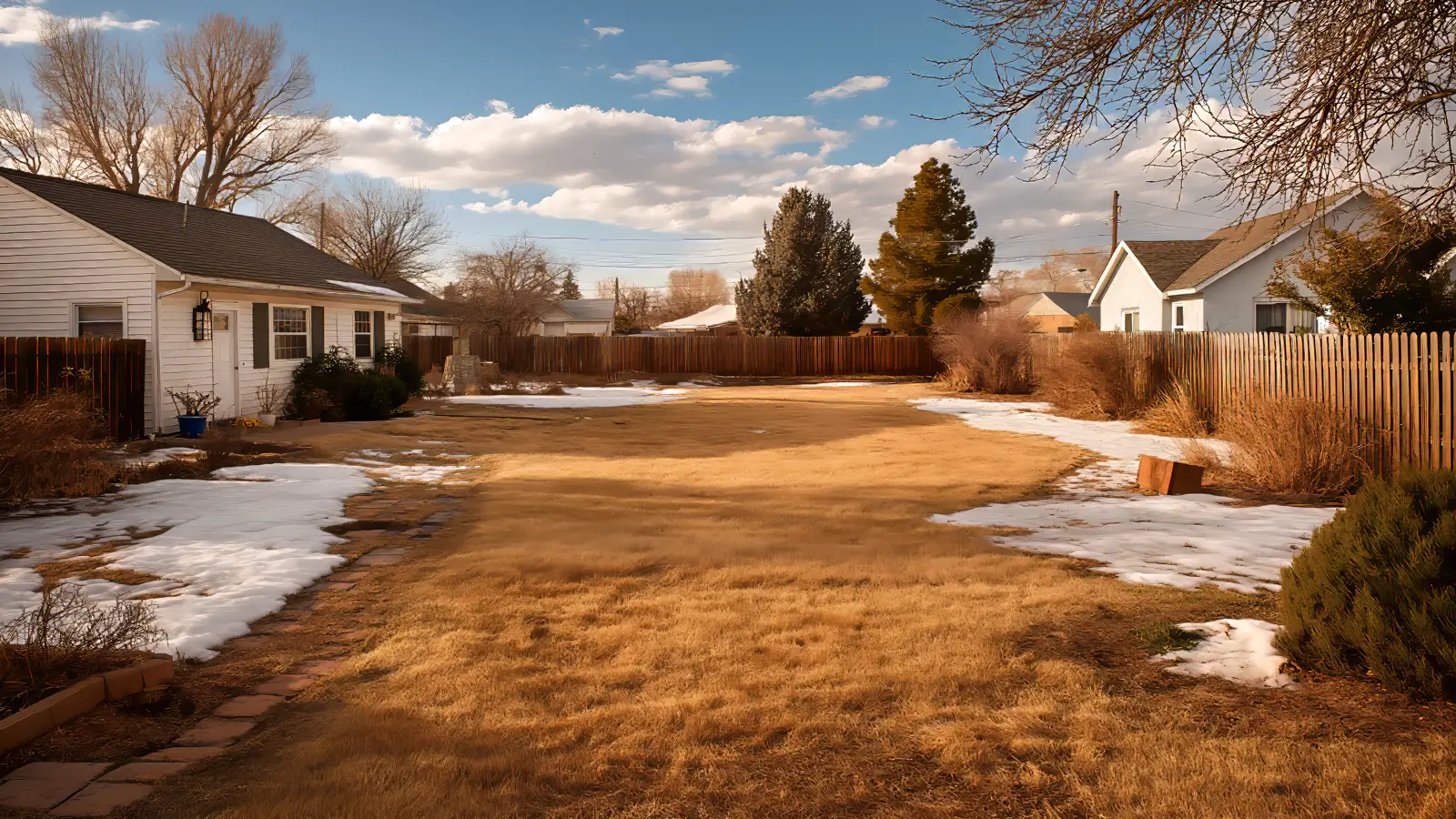
By the time spring arrives, most lawn decisions become reactive. Growth starts, problems become visible, and the instinct is to fix what’s in front of you as quickly as possible. In clay soil, this often leads to a cycle of repeating symptoms without addressing the conditions that cause them.
Late winter offers a clearer window. Without active growth masking underlying issues, patterns stand out. Areas that stay wet, remain uneven or fail year after year are easier to identify when the lawn isn’t trying to recover. This is when it becomes possible to step back and evaluate whether the lawn needs reinforcement or a deeper shift in approach.
Timing matters because clay soil limits what can be done once it becomes saturated. Early spring is often the wettest period of the year in Northeast Ohio. Working the soil at that stage, even with good intentions, can increase compaction and undo progress before it begins.
Repair can improve appearance quickly, but it doesn’t always change long-term performance. Structural changes take longer to plan and implement, but they’re what alter how the lawn behaves season after season. Waiting until spring to make that distinction often means postponing meaningful improvement for another year.
Strong lawns aren’t built by reacting to spring growth. They’re built by choosing the right approach before the season begins, when there’s still time to address the conditions that determine how the lawn will perform.
Building a Lawn That Works With the Soil, Not Against It
Clay soil isn’t a flaw in Northeast Ohio landscapes. It’s a constant.
Once you understand how it behaves, the pattern behind recurring lawn problems becomes easier to recognize. Wet areas, thinning turf and repeated repair aren’t random setbacks. They’re predictable outcomes of soil that limit how water moves and how roots develop.
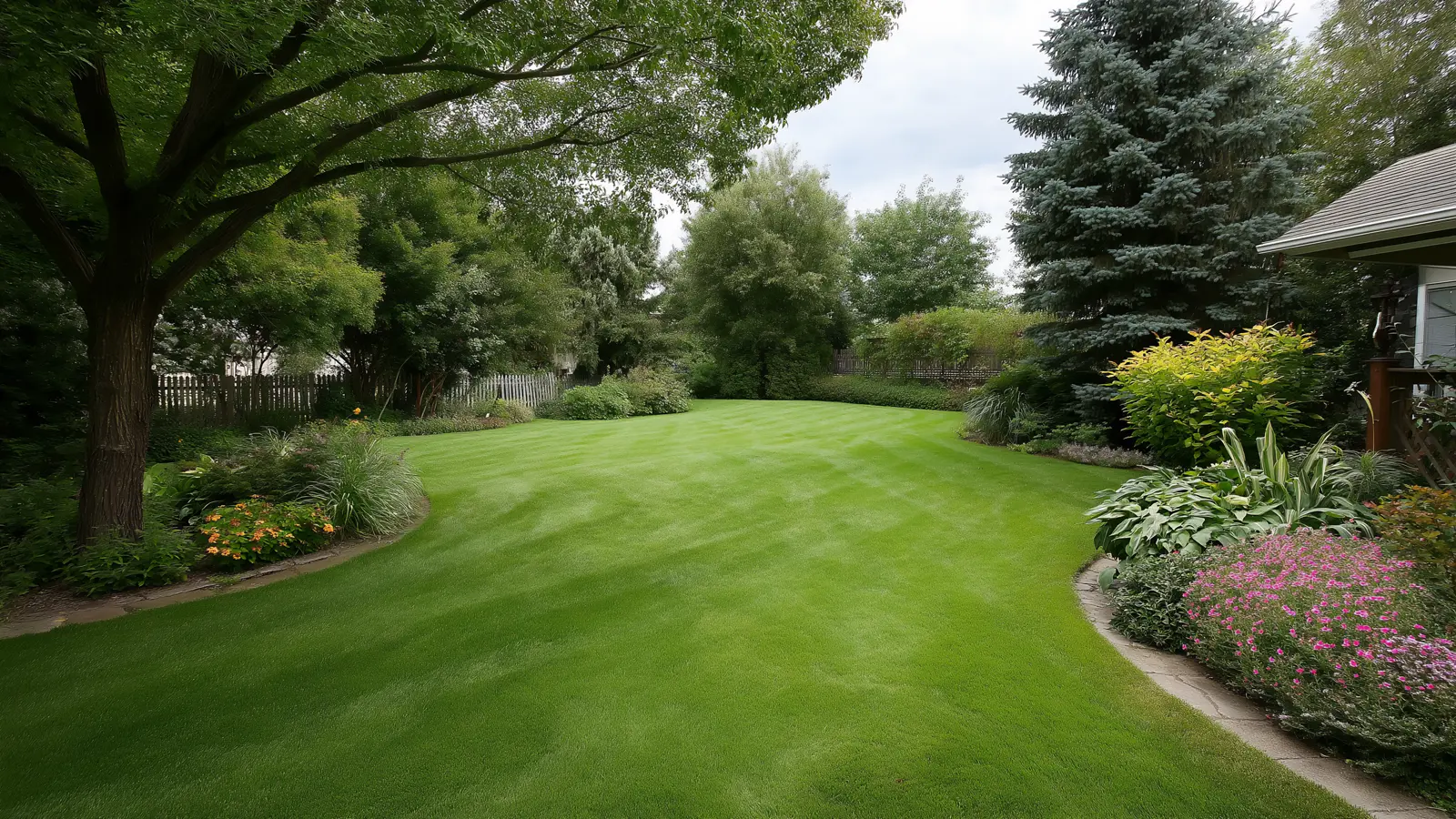
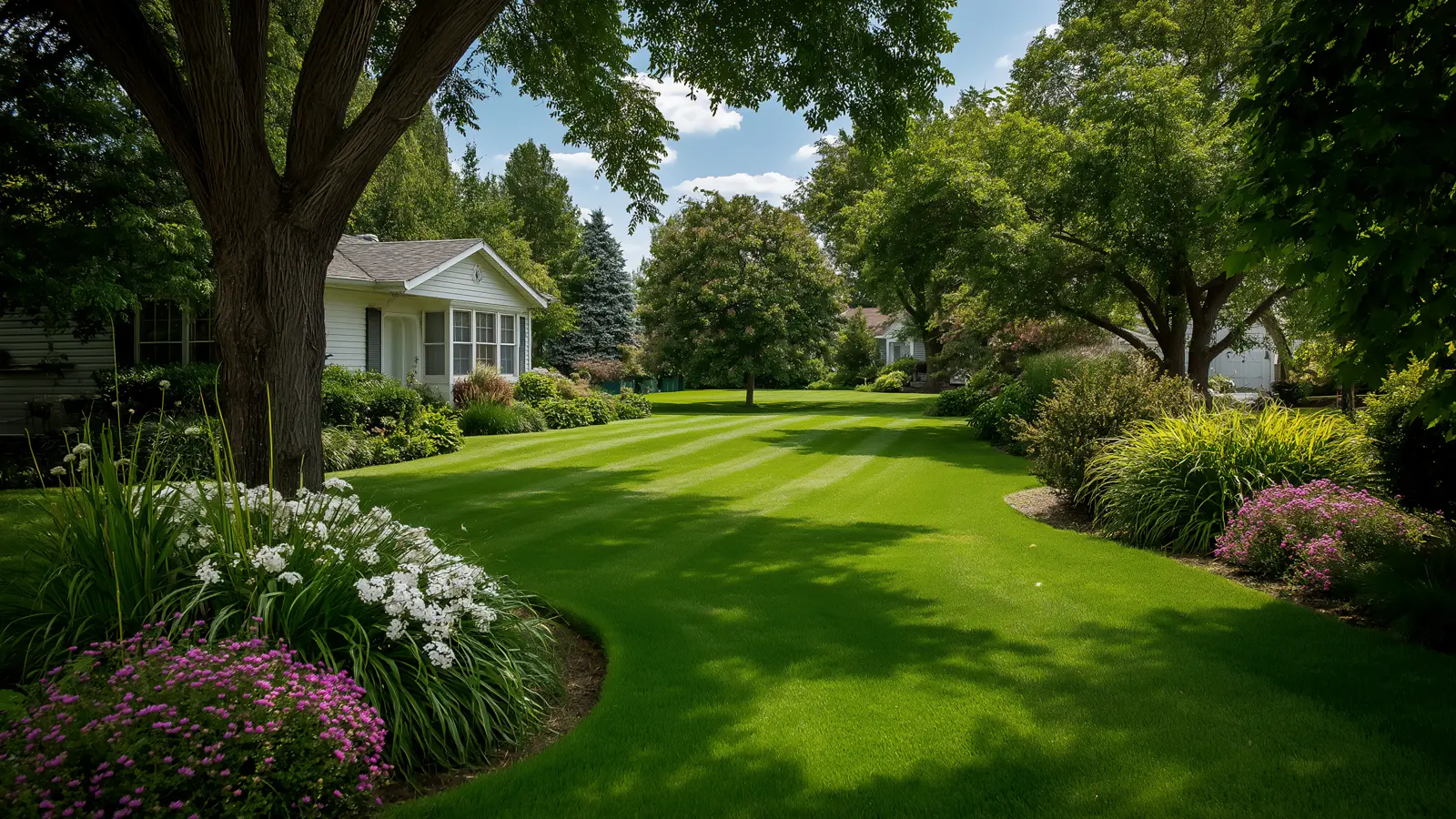
The difference comes from how those conditions are handled. In some areas, improving soil structure over time creates a more stable foundation for turf. In others, the better decision is to recognize where grass will continue to struggle and adjust the landscape to fit the site, rather than forcing it.
That shift is what changes the trajectory. Not more inputs, not better timing, but alignment between the soil, the environment and how the space is used.
When that alignment is in place, the lawn becomes more consistent, easier to maintain and far less dependent on repeated fixes that never quite hold.